How the Clever Platform Powers Digital Learning at Scale
Schools rely on technology more than ever, yet managing access, security, and student data remains one of the hardest parts of digital education. Clever exists to remove that friction. It acts as the connective layer between school systems and learning applications, making sure the right people get access to the right tools at the right time, without extra steps or constant IT intervention.
Clever’s Business Model
Clever’s business model is built around adoption first, revenue second. Instead of locking schools behind paywalls, the core platform is widely available so districts can onboard without financial pressure. This approach encourages broad usage across schools of all sizes and budgets.
The value Clever provides is operational. It reduces the daily workload for IT teams, lowers login issues for students, and creates consistency across digital tools. Schools adopt Clever because it saves time and prevents chaos. Once the platform becomes part of daily instruction, districts may choose to expand into advanced identity management and security features that require deeper infrastructure support.
From Clever’s side, revenue comes from premium services that solve higher-level problems. These include automated account lifecycle management and enhanced authentication methods. Instead of charging per app or per login, Clever aligns its growth with how deeply a district relies on secure identity and access management.
This model works because it supports scale without forcing commitment upfront. Schools get immediate value, and Clever earns trust before asking for expansion.
Clever’s Digital Learning Platform
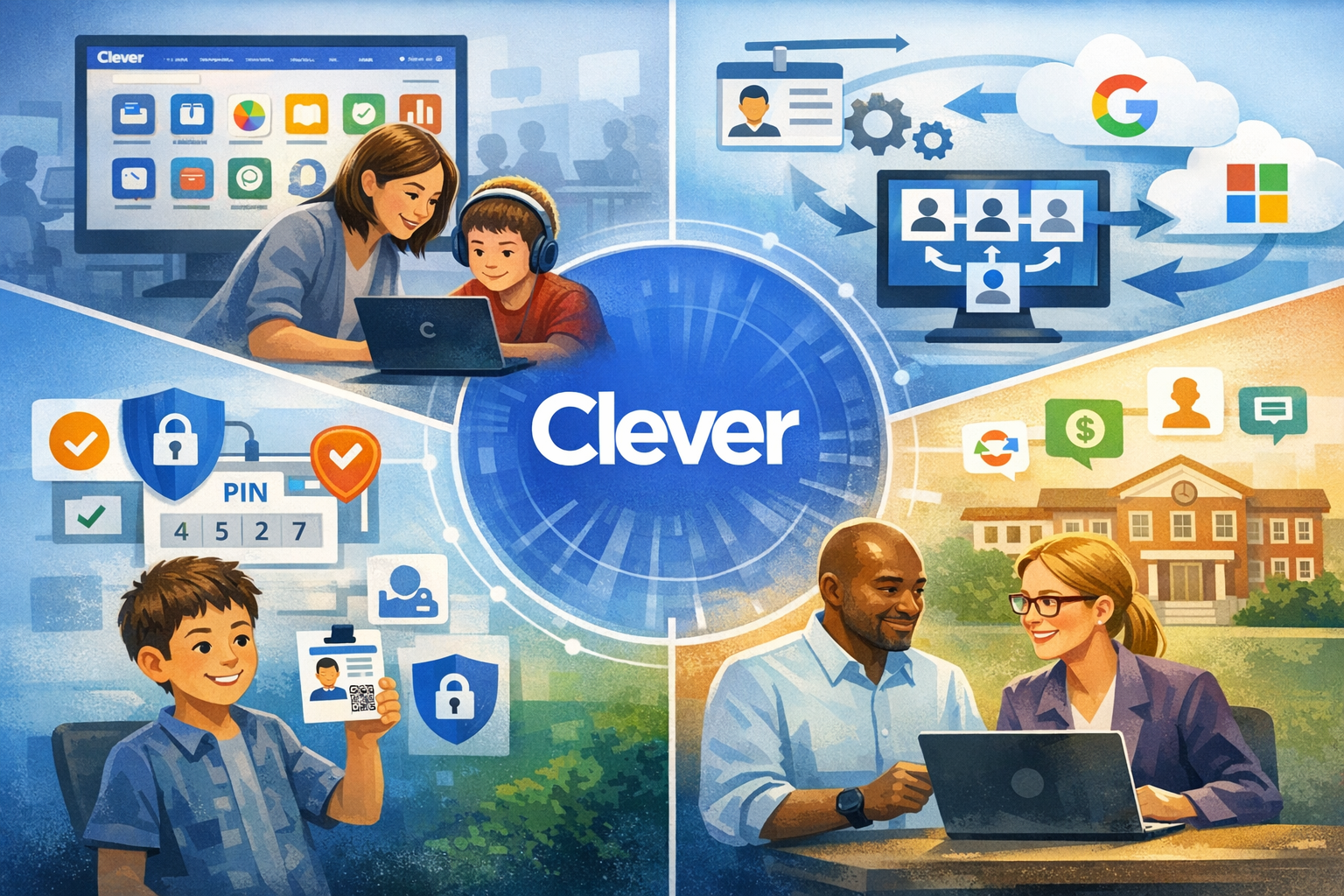
The Clever platform is best understood as a single access point for everything digital in a school environment. Students and teachers log in once and see only what applies to them, no searching, no extra passwords, no confusion.
Behind the scenes, Clever connects directly to the school’s student data system. Class schedules, enrollments, and role changes flow automatically into the platform. When a student moves classes or a teacher’s assignment changes, access updates on its own. There’s no need for manual edits or delayed fixes.
For students, this means fewer barriers. Younger learners aren’t forced to remember multiple credentials. Older students don’t waste time troubleshooting logins. Learning tools are ready when class starts.
For teachers, the platform acts as a launchpad. Apps are organized in one place, shared links work reliably, and instructional time isn’t lost to technical issues.
For administrators, visibility matters. They can see which tools are being used, who has access, and where issues might exist. That insight supports better decisions about technology adoption and data protection.
The platform isn’t flashy by design. It focuses on reliability, speed, and simplicity—qualities that matter more in classrooms than extra features.
Clever IDM (Identity Management)
Identity management is one of the most complex problems schools face, even if it’s invisible to students. Every year brings new enrollments, staff changes, graduations, and transfers. Each change creates risk if accounts aren’t updated correctly.
Clever IDM automates the full lifecycle of user accounts. When a student enrolls, their account is created. When they change schools or leave the district, access is updated or removed. The system follows the data, not manual processes.
This automation reduces errors that lead to security gaps or broken access. It also eliminates hours of repetitive work for IT teams, who would otherwise manage accounts across multiple systems one by one.
IDM also brings structure. Password policies, group memberships, and permissions stay consistent. Administrators gain clear oversight into who exists in the system and why. That clarity becomes critical during audits, security reviews, or incident response.
Rather than acting as another tool to manage, Clever IDM quietly keeps everything aligned. When it works well, most people never notice it—and that’s the point.
Classroom MFA (Multi-Factor Authentication)
Security in schools has to work with students, not against them. Traditional multi-factor authentication often assumes users carry personal devices or understand complex verification steps. That assumption doesn’t hold in many classrooms.
Classroom MFA is designed around how schools actually operate. It adds a second layer of verification without slowing students down or disrupting lessons. Younger students can authenticate using visual or physical methods that don’t rely on phones. Older students and staff can use stronger verification options when appropriate.
The system adapts to context. Schools can apply stricter authentication outside trusted environments and lighter checks inside them. That flexibility allows districts to strengthen security without creating daily friction.
Most importantly, Classroom MFA integrates directly with existing login flows. Students aren’t learning something new; they’re just confirming who they are in a way that fits their age and environment.
As cyber threats against schools increase, this kind of practical security becomes essential. Classroom MFA strengthens protection while respecting how learning actually happens.
Why Clever Matters
Clever isn’t just a login tool. It’s infrastructure. It supports access, protects identities, and keeps digital learning running smoothly behind the scenes.
Its strength lies in restraint. The platform doesn’t overwhelm users with options. It focuses on solving real problems: access delays, account errors, security gaps, and wasted instructional time.
For schools navigating growing digital demands, Clever provides stability. For students and teachers, it removes friction. For administrators, it brings control without complexity.
That balance is why Clever continues to play a central role in modern education technology, and why it has become difficult to replace once embedded in daily school life.